Ink. Power. Purpose.
Truth. Strength. Self-expression.
Tattoos are more than images on skin. They are declarations. They are private promises made visible, turning points carried forward, and bold reminders that your body belongs to you.
Across generations, women have used tattoos to reclaim identity, challenge beauty standards, honor heritage, and mark survival. A tattoo can hold grief. Growth. Defiance. Joy. It can become a small compass during a difficult season or a powerful flag raised after a battle no one else could see.
At Girls with Tattoos, we believe every piece has a story: and every woman deserves the space to tell it.
Tattoos Speak When Words Fall Short
A tattoo does not need to explain itself to be meaningful.
It may commemorate someone loved. It may transform a scar into a symbol of resilience. It may celebrate a new beginning, a cultural connection, a personal victory, or a decision to stop living according to someone else’s expectations.
The meaning is yours.
Research and cultural history continue to show how tattoos can function as expressions of autonomy and self-determination. Women have used ink to push back against narrow definitions of femininity and create what scholars often describe as intentional body projects: visible choices that redefine beauty, identity, and confidence on personal terms.
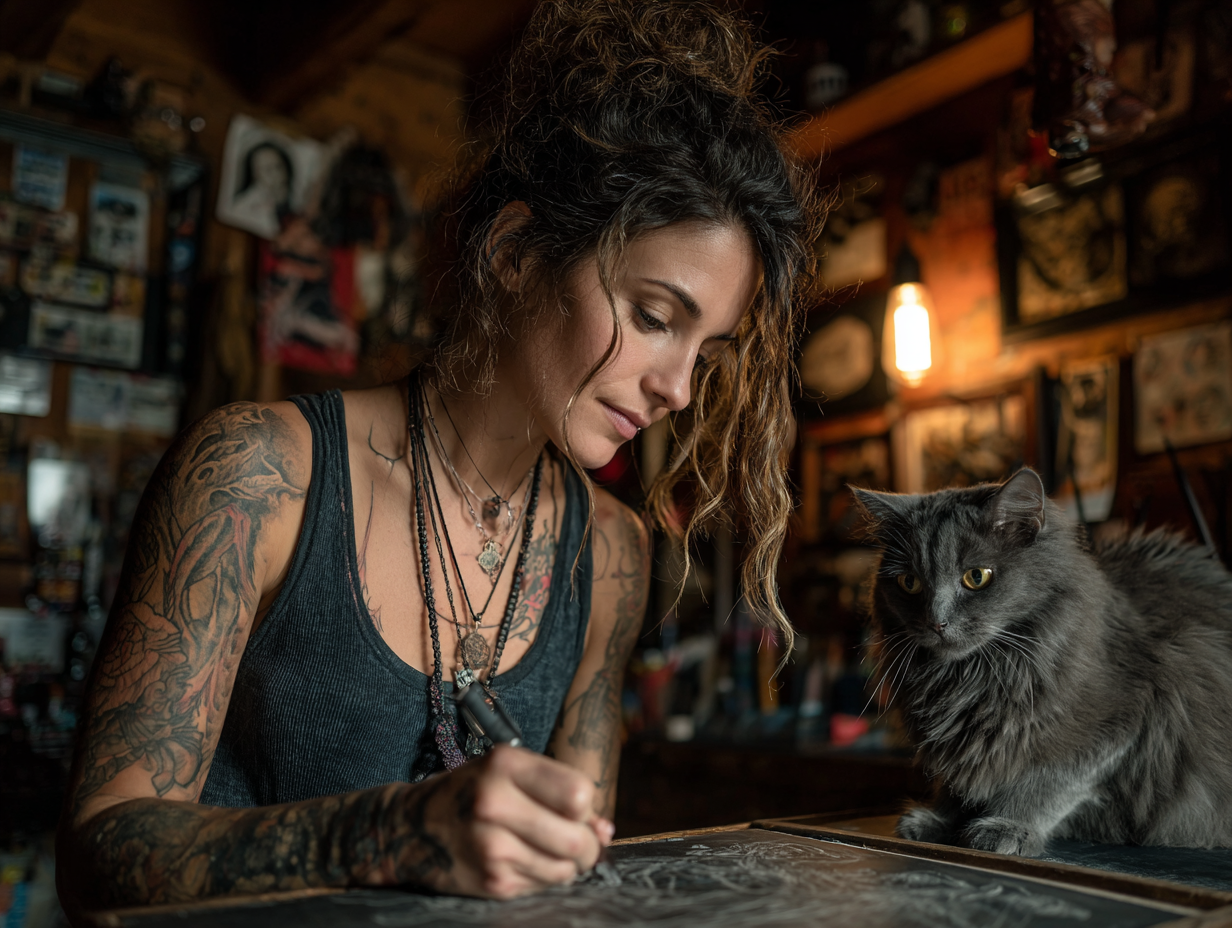
A memorial tattoo might look like a flower, an animal, a date, or a line of handwriting. To the world, it is art. To the person wearing it, it is a doorway into memory.
That duality is what makes tattoo culture so powerful. It connects the visible and invisible. The personal and universal.
Empowerment Journeys Written in Ink
There is no single way to become empowered.
Some women arrive at the tattoo studio after leaving a relationship that diminished them. Others mark the end of illness, the beginning of sobriety, a career leap, a gender journey, or a hard-won return to self-trust. Some simply choose a design because it makes them feel beautiful, fearless, or fully at home in their own skin.
Every reason is valid.
A woman reclaiming her body after trauma may choose a fierce animal, a protective symbol, or a design placed over a scar. A first-generation daughter may carry ancestral patterns that connect her to family and history. A creative professional may build a visual language that reflects her work, values, and evolving identity.
These stories break stereotypes because they refuse to be reduced to appearance.
A tattooed woman is not a type. She is not a trend. She is not a cautionary tale or a rebellion designed for someone else’s approval.
She is the author.
Women’s tattoo culture has also revealed the limits of traditional empowerment narratives. A design is most empowering when the person wearing it defines its meaning, chooses its visibility, and controls how her story is shared. Cultural symbols deserve research, respect, and permission: not casual borrowing. Personal agency and cultural responsibility belong together.
Breaking Stereotypes, One Choice at a Time
Society has long tried to prescribe what women should look like. Tattoos challenge that prescription with every line, shade, and placement.
Bold sleeves. Delicate fine-line work. Black-and-gray realism. Colorful traditional designs. Minimal symbols. Full-body artistry.
There is room for all of it.
Breaking stereotypes does not require performing toughness. It can look soft, elegant, playful, sensual, spiritual, loud, quiet, or entirely unexpected. Strength is not limited to one aesthetic.
Try these practical mindset shifts:
- Define beauty for yourself. Choose designs because they feel true, not because they fit someone else’s idea of femininity.
- Own your visibility. A forearm tattoo can be a public statement. A rib or thigh piece can remain intimate. Neither choice is more courageous.
- Protect your boundaries. You decide who gets to hear the full story behind your ink.
- Choose collaboration over pressure. A skilled artist should listen, communicate clearly, and respect your comfort.
- Honor culture and context. Learn the history behind symbols, patterns, and scripts before making them part of your identity.
Confidence grows through repeated self-definition. Every intentional choice strengthens the muscle.
Branding Identity: Your Body as a Visual Language
Personal branding is not limited to logos, websites, or color palettes. It is the experience people associate with you.
Your tattoos can become part of that Branding Identity: a visual language that communicates your values before you say a word.
This does not mean turning your body into a marketing product. It means recognizing that self-expression can be strategic, creative, and deeply personal.
Consider building a tattoo identity through:
- A signature motif: Repeated flowers, celestial shapes, animals, or geometric details can create visual continuity.
- A consistent aesthetic: Traditional, illustrative, ornamental, realism, or abstract styles may reflect a recognizable point of view.
- A connected series: Several tattoos can represent different chapters of one larger story.
- Meaningful contrast: Soft imagery paired with powerful themes can challenge assumptions about what strength looks like.
- Intentional placement: The location of a tattoo can influence how it moves with your body and how it enters professional or social spaces.
Innovation begins when you stop asking, “What is expected?” and start asking, “What is possible?”
Innovation may mean reimagining floral tattoos as symbols of leadership. It may mean combining heritage with contemporary design. It may mean transforming an old piece into something new through a thoughtful cover-up or rework.
Your visual identity can evolve. So can you.

Motivation You Can Carry Every Day
Motivation is easier to access when it has a shape.
A tattoo can serve as a daily anchor: a reminder of a promise, a boundary, a dream, or a truth you once needed to fight to believe. It can turn an abstract goal into something you can see, touch, and carry through difficult mornings.
Before choosing a motivational tattoo, ask:
- What chapter am I closing?
- What value do I want to remember?
- What do I want to feel when I see this design?
- Will the meaning still matter as my life changes?
- Do I want the message to be obvious or personal?
Words can be direct: unafraid, enough, persist, become.
Symbols can be expansive: a torch for leadership, a mountain for endurance, a compass for direction, or a phoenix for transformation.
The strongest motivation does not shout constantly. Sometimes it waits quietly beneath a sleeve, visible only when you need it.
Tattoo Project Management: Plan the Story Before the Session
A meaningful tattoo deserves more than an impulsive appointment. Treat it as a creative ProjectManagement process: one that protects your budget, your body, your time, and your vision.
1. Write the creative brief
Describe the story, emotion, symbols, preferred style, size, and placement. Save reference images, but do not expect an artist to copy another person’s work. Use references to communicate atmosphere and direction.
2. Research the artist
Review healed work, not only fresh tattoos. Look for experience with your desired style, placement, skin tone, and level of detail. A strong portfolio is important. So is respectful communication.
3. Map the placement
Think about visibility, movement, future designs, workplace considerations, and how the tattoo will interact with your body. Take a photo of the area and sketch approximate proportions over it.
4. Build a realistic budget
Ask about the artist’s hourly rate, minimum charge, deposit, number of sessions, and touch-up policy. Include travel, time off, aftercare supplies, and possible revisions in your plan.
5. Schedule with intention
Do not place a major tattoo immediately before a beach trip, intense workout, or demanding event. Leave room for healing. Your body needs time to complete the work.
6. Plan the consultation
Bring your brief and your questions. Discuss pain, sizing, color, line weight, healing, and what happens if the design needs adjustment. Consent is part of the process from beginning to end.
7. Document the journey
Photograph the design, the session, and the healed result. Keep notes about what the tattoo means now and what you hope it continues to represent. The record becomes part of the story.

Good planning does not remove spontaneity. It creates the foundation for confident choices.
Your Story Belongs in the Conversation
Tattoo culture becomes stronger when more women share the truth behind the art.
Not polished perfection. Not a rehearsed performance.
Real stories. Brave choices. Complicated journeys. Beautiful contradictions.
The Girls with Tattoos reality series celebrates women whose ink represents something larger than style. Our community brings together tattoo enthusiasts, artists, storytellers, and viewers who understand that self-expression is a form of connection.
If you have a tattoo with a story, share it with our community. You can also review the Pre-Submission Instructions Guide for practical filming, lighting, framing, and storytelling tips.

🔔 SUBSCRIBE TO GIRLS WITH TATTOOS
Watch the story. Meet the women. Join the movement.
https://www.youtube.com/watch?v=7Mt_HEA5hOE
Your tattoo may begin as a personal mark, but its meaning can travel farther than you imagine. It can give someone else courage to reclaim her body, name her truth, honor her history, or begin again.
Ink carries memory.
Power carries forward.
Purpose connects us all.